
- Posted 28-Mar-2022
Inclusive blended learning: EU working group on schools seminar
On 8 March 2022, representatives from EU Member States’ education ministries and stakeholder organisations discussed the pedagogical value of blended learning for enhancing inclusion and the related crucial, evolving role of teachers.
About the seminar
Blended learning - as defined in 2021 Council Recommendation on this subject - is characterised by the mixing of various learning environments and (non-)digital tools.
The Council of the European Union’s Recommendations on blended learning have been strongly influenced by lessons learned from the COVID-19 pandemic.
Dannewerkschule success story
The one-day seminar began with a presentation of a success story of the implementation of blended learning in schools – the Dannewerkschule in Germany.
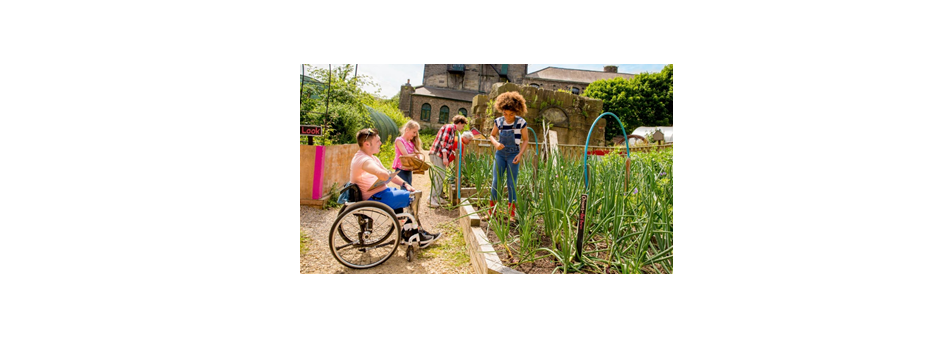
The Dannewerkschule offers a wide range of learners with diverse needs a self-paced learning path featuring non-typical learning environments, such as the school garden, its kitchen and workshops.
Pupils at the Dannewerkschule can participate in learning activities digitally by accessing the school’s online learning platform and benefit from traditional classroom teaching.
Blended learning for inclusion
Building on input provided by academia, policy-makers and stakeholders, the working group then discussed key points, such as
- how blended learning can help to enhance inclusion and address inclusion issues that may arise from fully remote teaching
- the skills required for teachers to effectively and independently apply blended learning
- the respective roles of teachers, policy initiatives, funding opportunities and teacher training support needed to enhance inclusion in blended and remote learning
- how to ensure schools have the independence required to apply blended learning techniques in an innovative way
- whether the successful application of blended learning make the teaching profession more attractive to (potential) teachers
Teachers’ initial education and professional development
Participants in the seminar also reflected on how blended learning is featured in initial and continued teacher education.
They highlighted
- the importance of providing incentives for continued education and related professional development to encourage the uptake of opportunities
- how teachers’ continued professional development has become more important in light of the current switch to remote and blended learning by schools
- how a variety of learning opportunities for teachers, such as peer support, action research, lesson study (teacher-led research in a small group of peers), massive open online courses (MOOCs) and professional training, can support the switch to blended learning in schools.
Digital tools supporting blended learning
Representatives of the Austrian education ministry presented the Distance Learning Service Portal that they have created, initially as an ad-hoc service for teachers to facilitate distance learning during the pandemic, which has now become a support platform for schools in their school development. They also showcased a massive open online course (MOOC) on distance and blended learning that is now available as a self-paced learning course for teachers.
Representatives from Cyprus referred to useful tools provided at the EU level, such as the SELFIE Pedagogical Innovation Assistant Toolkit - a comprehensive package helping schools to develop a digital action plan to help strengthen their digital capacity. They also highlighted the digitally supported learning environment website as an example successfully promoting and embedding blended learning in the Cypriot education system.
Next steps
The working group plans a peer learning activity on inclusive blended learning.
Regular meetings will follow between now and 2024, for example on teacher competences and competence assessment.
These exchanges will support the implementation of the Pathways to school success initiative and will help to inform the development of existing and future policy measures on blended learning and inclusion in education and training.
Source: European Commission I European Education Area (https://bit.ly/36SHcia)