

- Posted 01-Dec-2020
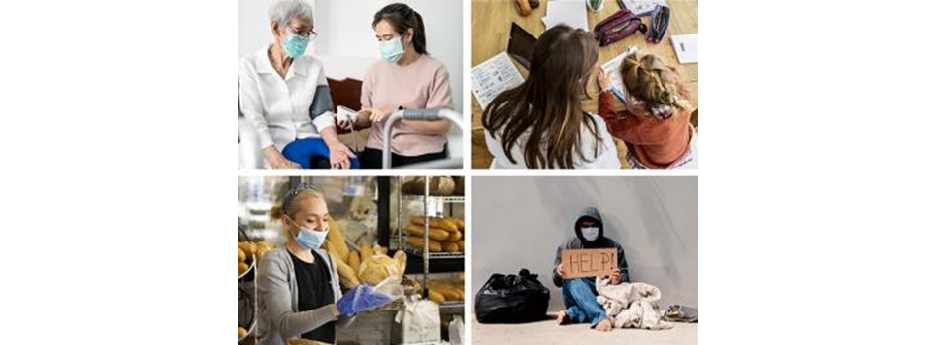
Social rights: Coronavirus pandemic continues to hamper access to education and healthcare
The rights to education, healthcare and fair working conditions are among the rights most affected by the Coronavirus pandemic. The Fundamental Rights Agency’s (FRA) latest bulletin reveals the impact of COVID-19 restrictions on people’s social rights and the groups most at risk.


- Posted 01-Dec-2020
The European Parliament presents six different possible scenarios in case there is a delay or a persisting obstruction of the new Multiannual Financial Framework
A group of experts of the European Parliament’s Budget Committee have explored the various scenarios that may apply in case of a delay or a persisting obstruction of the new Multiannual Financial Framework (MFF) and the recovery package. It is important to note that in their opinion they attempt to screen the range of possible options and neither what is more realistic or more desirable. The group of experts has presented the following six different scenarios.

- Posted 23-Nov-2020
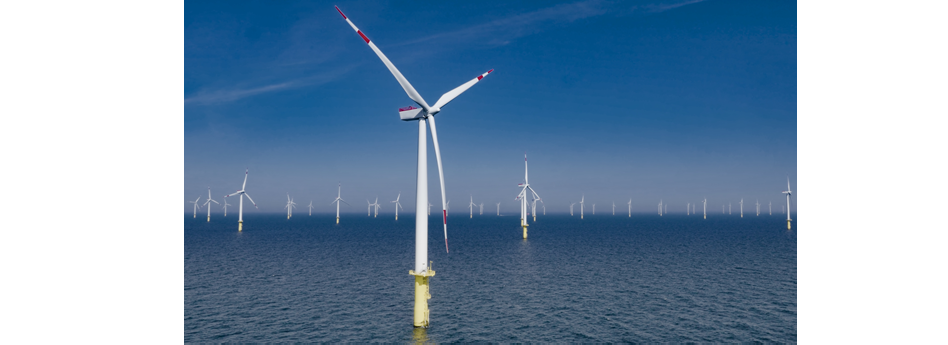
Boosting Offshore Renewable Energy for a Climate Neutral Europe
To help meet the EU's goal of climate neutrality by 2050, the European Commission presented the EU Strategy on Offshore Renewable Energy. The Strategy proposes to increase Europe's offshore wind capacity from its current level of 12 GW to at least 60 GW by 2030 and to 300 GW by 2050. The Commission aims to complement this with 40 GW of ocean energy and other emerging technologies such as floating wind and solar by 2050.


- Posted 23-Nov-2020
Emerging trends: What are the environmental impacts of artificial meat, delivery drones, blockchain and synthetic biology?
Assessing the environment’s prospects in a fast-changing world requires the consideration of emerging trends. A series of published joint European Environment Agency (EEA) and Eionet briefings, explore the potential environmental and policy impacts from four emerging technological innovations.


- Posted 23-Nov-2020
Covid-19 wave of violence against women shows EU countries still lack proper safeguards
Lockdowns to contain the coronavirus led to spikes in domestic violence reports. In two new studies, the European Institute for Gender Equality (EIGE) assesses the measures each EU country took to protect women during the pandemic and shows how governments can amplify the role of people witnessing violence.