
- Posted 21-Feb-2022
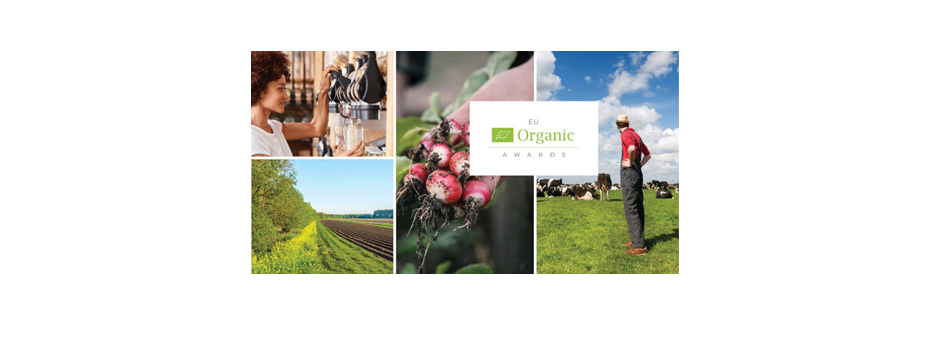
Launch of the first EU organic awards
The European Commission, the European Economic and Social Committee (EESC), the European Committee of the Regions (CoR), COPA-COGECA and IFOAM Organics Europe are together launching the first ever EU organic awards. These awards will recognise excellence along the organic value chain, rewarding the best and most innovative actors in organic production in the EU. Applications will be open from 25 March until 8 June 2022.
These awards are the first example of EU-wide organic awards and are conceived as a follow-up to the Action Plan for the development of organic production, adopted by the Commission on 25 March 2021, which announced the launch of such awards to raise awareness of organic production and increase demand for organic products.
Eight awards within seven categories will be given out, including best organic farmer female, best organic farmer male, best organic region, best organic city, best organic bio-district, best organic SME, best organic food retailer and best organic restaurant. More information can be found on the dedicated EU Organic Awards page.
An award ceremony will be organised to announce the winners on EU organic day, 23 September 2022.
Background
The overall aim of the Action Plan for the development of organic production is to boost substantially the production and consumption of organic products, and to enhance further the sustainability of organic production, in order to contribute to the achievement of the Farm to Fork and Biodiversity strategies' targets such as reducing the use of fertilisers, chemical pesticides and antimicrobials. The organic sector needs the right tools to grow, as laid out in the Action Plan. Structured around three axes – boosting consumption, increasing production, and further improving the sustainability of the sector – 23 actions are put forward to ensure a balanced growth of the sector.
To boost consumption, the Action Plan includes actions such as informing and communicating about organic production, promoting the consumption of organic products, and stimulating a greater use of organics in public canteens through public procurement. Furthermore, to increase organic production, the Common Agricultural Policy will remain a key tool for supporting the conversion to organic farming. It will be complemented by, for instance, information events and networking for sharing best practices and certification for groups of farmers rather than for individuals and actions to strengthen the organic value chain. Finally, to improve the sustainability of organic farming, the Commission will dedicate at least 30% of the budget for research and innovation in the field of agriculture, forestry and rural areas to topics specific to or relevant for the organic sector.
Source: European Commission I Agriculture and Rural Development (https://bit.ly/36n8ehv)